Tom Bennett · Central Ohio
You own an older house. Something is happening — a stain, a crack, a cold room, a smell in August. And you do not know whether it is nothing, or whether it is fifteen thousand dollars.
So you do one of two things. You leave it and hope, until it becomes the fifteen thousand dollars. Or you call somebody, and a person who knows a great deal more than you stands in your basement and tells you what is wrong, and their income depends on the answer.
There is a third position. It is knowing what you are looking at before the phone call — where the water comes from, whether it is still coming, and what has already been ruled out. Nearly all of it is collected with a pencil, a phone, and a willingness to go outside in the rain.
Before You Call Anyone
One-time payment. Instant PDF. No subscription, nothing that expires.
Get the book196 pages · 30-day guarantee · set in large type
The arithmetic this book runs on
Almost every expensive thing an old house gets quoted for has a cheap question sitting in front of it. The cheap question takes a season rather than a signature.
| What the house is doing | What it is commonly quoted as | Cost to check first | Time it takes |
|---|---|---|---|
| Water on the basement floor after heavy rain | $2,000–$6,000 interior drainage $7,000–$15,000 exterior |
$9 | One storm |
| A crack that looks like it is growing | $2,225–$8,133 typical up to $23,000 to lift |
$0 | One year |
| A stain on the ceiling below the attic | $5,902–$13,373 to replace a roof | $0 | One wet afternoon |
| Cold rooms and a high winter bill | $3,436–$11,837 for the windows | $0 | One cold morning |
Quoted ranges are national US figures from published cost surveys, current at the time of writing. They are here to show the size of the gap, not to estimate your house. Nothing here promises that a nine-dollar part fixes a wet basement — only that the cheap question is worth asking first, and that asking it costs you nothing.
The method
Most people sort what a house shows them into two piles: things that are fine, and things that are frightening. Two piles is why old-house owners swing between ignoring everything and replacing everything.
Mark it, date it, photograph it. Look again next season.
Costs nothingOrdinary upkeep, now. Usually removes a cause rather than a symptom.
Tens of dollarsYou need better information before you spend anything.
A call, or an inspectionMoney — and the reading says what makes it justified.
Hundreds to thousandsWatch is a real decision, not a way of avoiding one. A house is a slow system. Whether a crack is moving is a comparison across time, and nobody can sell you that — you can only wait for it. Of the fifty readings, twenty-seven end in watch or maintain, because that is what the evidence usually supports.
What is inside
Each reading takes one thing a house does: what you are looking at, what it was for, what it usually is, what would make it serious, and what it costs to check against what it costs to fix.
Part One · 5 readings
Part Two · 10 readings
…and five more.
Part Three · 9 readings
…and five more.
Part Four · 8 readings
…and four more.
Part Five · 8 readings
…and four more.
Part Six · 6 readings
…and two more.
Part Seven · 4 readings
Free, and no email required
The Two Walks — the downspout walk and how to date a stain. Both are things you can do this weekend, both cost nothing, and both come with the honest limits on what they can tell you.
If they are useful, the book has forty-eight more. If they are not, you have lost three pages of reading and no money.
3 pages · no sign-up · nothing to unsubscribe from
Tom Bennett, central Ohio
Who wrote this
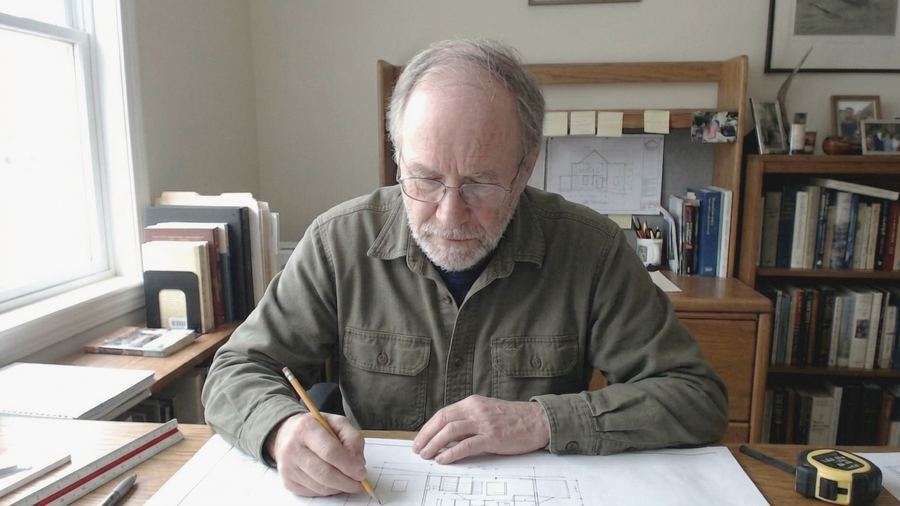
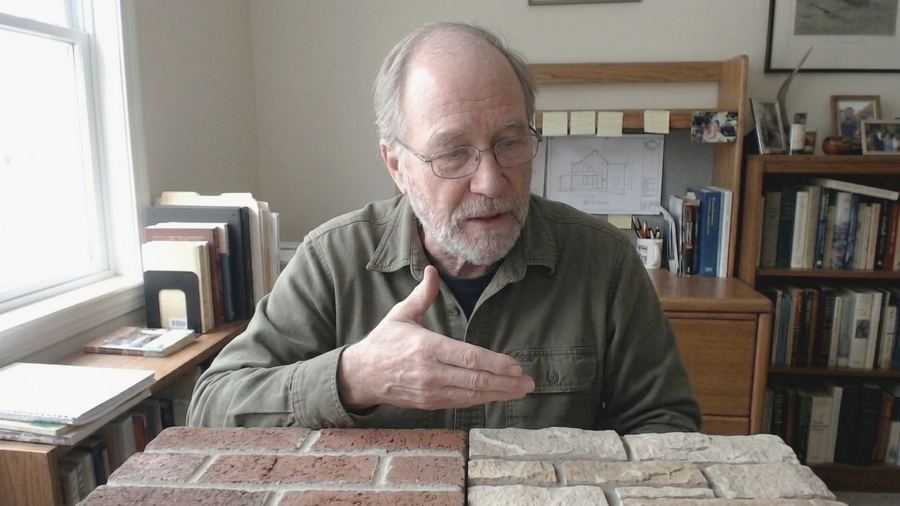
I am sixty-nine. I live in central Ohio with my wife Linda, and I was raised near Dayton.
I am not an inspector, an engineer or a contractor. I want to say that at the front rather than let you work it out at the back, because a good deal of advice about houses arrives dressed in a job title that is doing more work than the advice is.
What I have is a habit. I read about houses, I look at them slowly, and I have spent a long time noticing which explanations hold up when you check them and which ones only sound like they would.
The facts in this book are not mine. How water travels through soil, why ice forms at a cold eave, why hard mortar breaks soft brick — all of it is drawn from published building science and conservation guidance, and the last page of the book names the sources so you can go and read them yourself. What I have added is the order to do things in, and a plain way of saying what each thing means.
What I would like the book to do is make you harder to frighten and harder to sell to. Those turn out to be the same skill.
What you get
| Before You Call Anyone — 50 readings, 196 pages, illustrated Set in large type, with an index organised by clue rather than by chapter | $34 |
| The Handoff Sheet — what to write down before you call anyone | $9 |
| The Watch Sheet — one page per thing you are watching, with the trigger that changes it | $9 |
| The Quote Comparison Sheet — three quotes on one page, compared on mechanism rather than price | $9 |
| The Rain-Day Walk — fifteen minutes, during rain, in the water’s order | $7 |
| The Season Sheet — what each season will and will not show you | $7 |
| The Four Decisions Card — the whole method on one page | $5 |
| Every future edition, free, for as long as the book exists | — |
| Total value $80 | You pay $17 |
One-time payment. The complete PDF in your inbox within a minute or two.
Get the bookInstant download · read it on anything · print what you want
Read it. Do the downspout walk and the two checks in the free sample. If it has not paid for itself, write to me inside thirty days and I will refund it — no questions, and the six printables stay yours.
Honest answers
It assumes ordinary older American housing — timber-framed with wood siding, or solid masonry, with a basement or crawlspace and heating that has been changed at least once. The further back your house goes, the more Part Six applies. A house from the 1970s or 80s will still get most of the value out of Parts One to Five, because water and air behave the same in any building.
Nearly all of it is looking, writing down and waiting. The most physical thing in the book is fitting a nine-dollar plastic downspout extension and adding a few bags of soil. Nothing asks you onto a roof, up a ladder in weather, into an electrical panel or under a structure — and where something needs looking at from a place I would not send you, the reading says so and says who to send instead.
Less, honestly. The observation chapters work for anybody — knowing whether a stain is live is useful whoever owns the building, and it makes a much better conversation with a landlord. But most of the spending decisions assume the house is yours. I would rather say that than take your seventeen dollars on a misunderstanding.
No, and neither can anybody who has not seen it. What the readings do is narrow: they tell you which explanations are common, what would make one serious, and what evidence would separate them — so that the person who can see your house starts from a much better place. Where the honest answer is that something cannot be judged from a description, that is what you get.
It does not, and I would be careful with anything that does. The cost figures in the book are published national ranges, included to show the size of the gap between checking and fixing. The claim is narrower: the cheap question is worth asking before the expensive one, and asking it costs you nothing.
PDF, instant download, no app and no login. It is set on US Letter in large type, so it prints one-to-one at home — the four cards at the back are designed to be printed and kept in a drawer. A compact 158-page edition is included if you would rather use less paper.
Because most of the people who own older houses are not twenty-five, and I got tired of guides that expect you to fetch reading glasses to find out whether your basement is a problem.
The mechanisms will not — water has behaved the same way for a long time. The cost ranges will, which is why they are given as bands and why every future edition is free to anyone who has bought it.

Last call
Without the book: you notice the stain, you worry about it through the winter, and in the spring somebody quotes you five figures for the inside of a problem whose cause is still running down the outside of the wall.
With it: fifteen minutes in the next heavy rain tells you where the water goes. A pencil line and a date tell you whether the crack is moving. And when you do make the call, you make it from a position.
196 pages · six printables · 30-day guarantee